How Do We Plan A Path?
Author: Manuel R. CortezRodas
Once we have met the needs of path planning, we can begin to plan a path by addressing the following areas: Where Do We Start? When Do We Finish? How Do We Get There? Meeting the needs of path planning allows us to address the design and creation of the path.
Where do we start? We should start with organization, inventory, and structure. Path planning requires organization. We must get organized to start planning a path. Organization requires us to take an inventory of what we have available from those things that are concrete, as well as those which are abstract.
When we have become organized, and taken inventory, we must develop a structure that will support our organization, and secure our inventory.
A structure gives shape and helps hold form. Without it, all the organization and inventory would just remain a mound of possibilities and what if's.
When do we finish? We finish when we have achieved a successfully planned path which leads toward goals, accomplishments, and rewards. The goals we set out to fulfill should be specific, developed, researched, and flexible enough to accommodate all possible needs.
Accomplishments will arise and come to light all throughout the path. Each accomplishment should be acknowledge at the proper time, and should be celebrated by all those who have participated in the realization of the accomplishment.
It is also a good idea to create rewards which can be reached by completing tasks and stages of different magnitude.
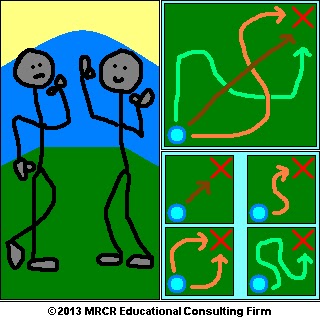
How do we get there? We get there by developing and creating direct, alternate, and staggered paths which allow for all to reach the same goal, at a pace that is appropriate, while allowing us to set challenges which can be overcome with determination, perseverance, and creativity.
A direct path will have the benefit of maintaining the end in sight. For those who do best when they forge on ahead, without the need to look back, this can be the path that leads them to success.
An alternate path has the benefit of reaching the end by taking turns and side-paths which present a unique and flexible path which helps us reach the same end that he direct path maintains in sight. For those who do best when allowed to wonder and explore beyond the linear straight forward approach, the alternate path would be the most efficient path toward success.
A staggered path can be the most efficient path toward success for those who require many multiple stages with specifically defined transition stages where progress and improvement takes place. A staggered path reaches the ending that the direct path maintains in sight, and the alternate path reaches through turns and side-paths that are explored as we wonder.
There may be many paths, but they all should end equally and fairly.
Copyright 2013. MRCR Educational Consulting Firm. All Rights Reserved.


