How to Conduct an Educational Council
Author: Manuel R. CortezRodas
Nature of Knowledge
It is only natural that we, as educators, seek council from others. That we seek advice and input from those, like us, who are experienced and have experience in education. We do not possess all knowledge. If we were to be able to possess all knowledge we would be divine. Even if we were to possess all knowledge, we would still have to share it with those who want to learn, and we would have to share that knowledge equally and successfully in order for knowledge to grow and expand.
On Knowledge
Knowledge grows and expands. It can be stored and it can be forgotten. Knowledge can become lost long ago and found ages from now. It can be rediscovered and it can be reapplied.
 Knowledge, like matter, can change from state to state, time to time, and place to place. One of the better ways to share knowledge with others is through the conduction of an educational council.
Council Example
Many cultures have developed a suitable method of conducting council meetings in which knowledge is shared. The Maya, for example, in their ancient book of council, the Popol Vuh, describe how the first council took place. The council was called, in the darkness, to address an issue. In the council, the participants share their thoughts, and express their concerns. In the council, the participants reach an accord, and knowledge became clear, and the participants became enlightened.
Conducting a Council
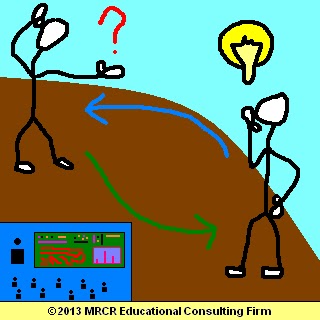
In a similar matter, Educational Councils should be held regularly as a way to share knowledge. They can help us solve problems and issues we face. Councils can be held with as few as two learners, or as many as a whole classroom. A council should be a place where learners can exchange knowledge, express concern, and reach solutions that illuminate the learners' educational problems. Some guidelines to keep in mind when conducting a council should be: What is the purpose of the council?, How will the participants share their knowledge?, How will the participants share their concerns?, and What is the agreement reached by the participants? Educators should encourage their learners to share and exchange knowledge in the classroom. Allowing learners to seek knowledge is a suitable method of education which should come natural to us as educators.
Copyright 2013. MRCR Educational Consulting Firm. All Rights Reserved.